
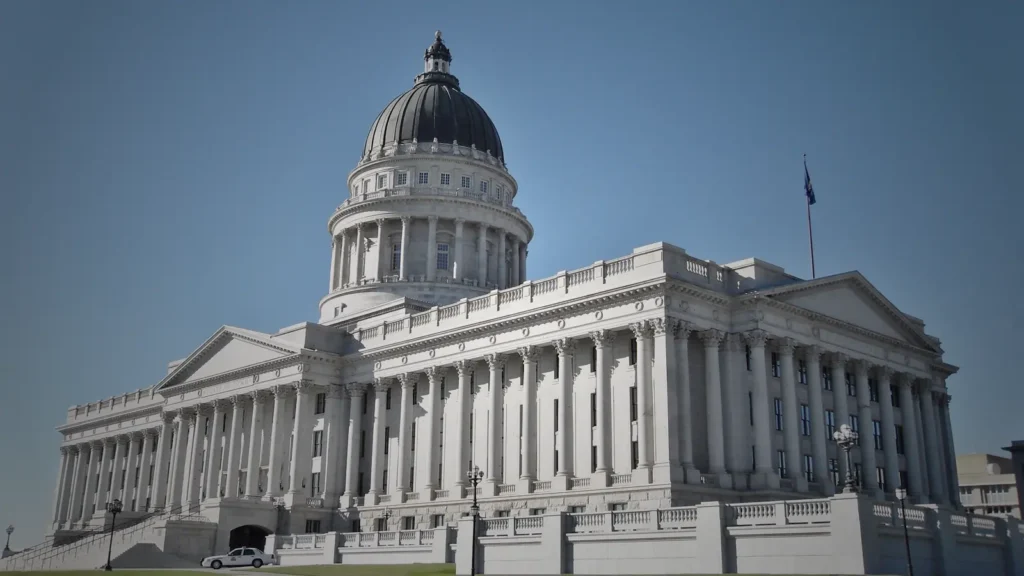
The federal government has stepped directly into Utah’s fight with Kalshi. The United States and the Commodity Futures Trading Commission have sued the State of Utah and Attorney General Derek Brown, asking a federal judge in Salt Lake City to stop the state from applying its gambling laws to prediction markets regulated by the CFTC.
The 33-page complaint was filed on Monday, October 26, and the agency announced it the following day. It comes six days after Brown took Kalshi to state court, and it makes Utah the 10th state the CFTC has sued over enforcement against prediction markets.
What the federal lawsuit asks for
The case, United States v. Utah, was lodged with the federal trial court in Salt Lake City under case number 2:26-cv-01055. Justice Department and CFTC lawyers signed it, and it rests on a single claim under the Constitution’s Supremacy Clause, the provision that lets valid federal law override conflicting state law.
According to the federal complaint, Washington wants the court to:
- Declare Utah’s laws preempted and invalid as applied to trades listed, offered or executed on CFTC-regulated exchanges, which the agency calls designated contract markets.
- Issue preliminary and permanent injunctions stopping Utah officials from enforcing those laws against such trades.
- Bar the state from investigating CFTC-regulated companies, along with their affiliates and partners, over those trades.
- Order Utah to pay the federal government’s costs and fees.
The filing says Utah’s pending case against Kalshi, and any future enforcement actions or investigations aimed at federally regulated exchanges, “must be enjoined immediately.” The request to cover affiliates and partners matters here, because Utah’s suit also names two Susquehanna trading firms that make markets on Kalshi.
Washington’s legal theory
The CFTC’s central claim is that the contracts Utah wants to ban are “swaps” under the Commodity Exchange Act, and that Congress handed the agency “exclusive jurisdiction” over swaps traded on the exchanges it supervises. The complaint notes that Kalshi has held its CFTC designation since November 2020.

Chairman Michael Selig cast the case as a defense of federal authority. “Congress entrusted the CFTC to be the federal regulator with sole responsibility to oversee these markets,” he said in the CFTC’s announcement, arguing that event contracts also give the public useful signals about what is likely to happen.
Congress entrusted the CFTC to be the federal regulator with sole responsibility to oversee these markets.
Michael Selig, CFTC Chairman
The complaint adds two practical arguments. If states could police event contracts, it says, exchanges would face “the prospect of 50 regulators across the country.” It also contends that forcing exchanges to shut out Utah residents would collide with a federal rule that requires them to offer impartial access to eligible traders.
To show it is not a passive regulator, the agency points to its recent work: an October 19 rule refining the definition of a swap, information-sharing agreements with the NBA, Major League Baseball and the National Hockey League, and insider trading cases tied to event contracts.
Three lawsuits, two court systems
The federal suit opens a third legal front in Utah. Kalshi fired first in February 2026, suing Gov. Spencer Cox and Brown in federal court on the theory that federal commodities law put its platform beyond the reach of state gambling law.

That theory lost. On August 4, U.S. District Judge Robert Shelby granted summary judgment to Utah, finding that the Commodity Exchange Act does not displace the state’s gambling laws. On September 8, the Tenth Circuit refused to block enforcement while Kalshi appeals, and that appeal is still pending, according to the attorney general’s office.
Brown then went on offense. His October 20 complaint in Salt Lake County’s Third District Court targets Kalshi entities and the Susquehanna firms, seeks to halt contracts on sports, elections, politics, culture and “mentions,” and asks for court-approved geolocation controls. Utah puts the fees Kalshi collected from Utah users at $30.6 million to $61.2 million, crypto.news reported.
What Utah and Kalshi say
Utah’s case rests on its constitution, which bars the legislature from authorizing gambling. “Kalshi runs an online casino in Utah and calls it a prediction market. That violates Utah law,” Brown said when he announced the state lawsuit, noting that Utah is one of only two states with a constitutional gambling ban.
Kalshi runs an online casino in Utah and calls it a prediction market. That violates Utah law.
Derek Brown, Utah Attorney General
Brown’s office did not immediately answer a request for comment on the federal suit, The Block reported. Notably, the CFTC complaint never mentions Shelby’s ruling for Utah. It instead cites decisions that favored the exchanges, including the Third Circuit’s ruling for Kalshi in its dispute with New Jersey.
Kalshi is not a party to the new case, but it has long made the same argument. “As a national derivatives market overseen by the CFTC, Kalshi answers to federal law, and no single state should have a veto over it,” spokesperson Jacki McGavick told Cointelegraph in response to Utah’s suit.
Part of a 10-state campaign
Utah joins a long list. Nine states were already in the agency’s crosshairs before Utah, according to the complaint: New York, Illinois, Arizona, Wisconsin, Minnesota, Connecticut, Kentucky, New Mexico and Rhode Island. The CFTC adds that it has weighed in with briefs before four federal appeals courts and one state supreme court.
The CFTC has sued Utah, just days after the state filed its own lawsuit against Kalshi.
Utah becomes the 10th state the federal regulator has sued to block enforcement against prediction markets. pic.twitter.com/LAORUZBmOu
— Chavdar Vasilev (@ChavVasilev) October 27, 2026
The record so far is mixed. According to the complaint, preliminary injunctions favoring the federal side have been entered in Arizona, Illinois and Minnesota. States, for their part, argue that sports betting is theirs to regulate and that the platforms are breaking state law and escaping state taxes, The Block reported.
Utah is an unusual test case. Several states in the CFTC’s sights, including New York, Illinois and Arizona, license and tax their own sportsbooks. Utah allows no gambling at all, and its suit reaches well beyond sports into election and culture contracts.
What happens next
The federal case is at its earliest stage. The complaint asks for preliminary relief to hold off Utah’s enforcement while the litigation plays out, and Kalshi’s appeal of the Shelby ruling remains before the Tenth Circuit.
The broader question may end up at the U.S. Supreme Court. New Jersey asked the justices in September to review the Third Circuit’s decision for Kalshi, and the court has not yet said whether it will hear the case, Cointelegraph reported. Key questions in Utah include:
- Whether the federal court grants preliminary relief, and how it squares that with Shelby’s ruling in the same district.
- Whether the Tenth Circuit decides Kalshi’s appeal first.
- Whether Utah’s state court case moves ahead while the federal suit is pending.
21+ (18+ in some states). Gambling problem? Call 1-800-GAMBLER.
Sources
- CFTC Sues to Block State Enforcement in Utah Amid Ongoing Efforts to Preserve Jurisdiction, Commodity Futures Trading Commission, October 27, 2026
- Complaint for Declaratory and Injunctive Relief, United States v. State of Utah, No. 2:26-cv-01055, U.S. District Court for the District of Utah, October 26, 2026
- Utah sues Kalshi, alleging its prediction market is gambling, Utah Office of the Attorney General, October 20, 2026
- CFTC sues Utah as battle over prediction market regulation intensifies, The Block, October 27, 2026
- CFTC sues Utah to block action against prediction markets, Cointelegraph, October 27, 2026
- CFTC sues Utah as prediction-market fight reaches 10 states, crypto.news, October 27, 2026
Michael Johnson is a senior copywriter and content strategist who has written for regulated gambling operators for close to a decade. He was a copywriter at The Rank Group in Gibraltar (2017-2019), a senior copywriter in the Ladbrokes Coral creative studio at Entain (2019-2021) and senior creative copywriter at Eyas Gaming (2021-2024), where he led messaging for gaming brands in regulated international markets and worked closely with compliance teams. Before that he wrote about videogames and esports for PC Gamer, Rock Paper Shotgun, Red Bull Esports and Kotaku UK. At Casinojournal he covers US gambling regulation, prediction markets, sports betting and sweepstakes casinos.
LinkedInMore news
- Federal Judge Bars Kalshi Sports Contracts on Two California Tribes’ Lands After Ninth Circuit Reversal
- Arkansas Sues Kalshi and Sweepstakes Operator VGW, Accusing Both of Running Illegal Gambling
- CFTC Gives Prediction Markets 30 Days to Stop Blocking States, Setting Up a Clash With Courts
- DraftKings, FanDuel, Fanatics and Robinhood Pull Sports Contracts From Utah After Kalshi Charges