
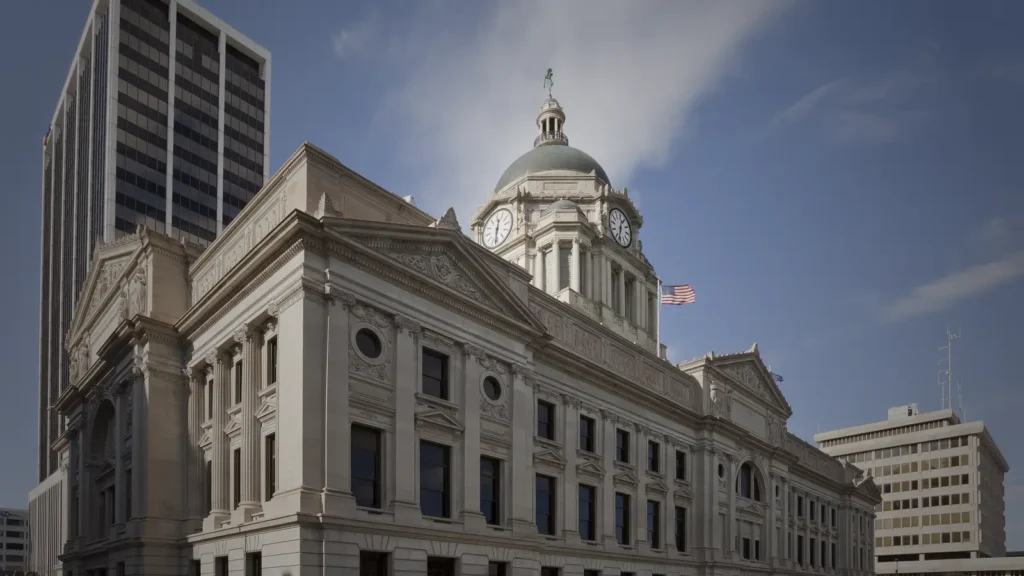
Voters in three northeast Indiana counties will decide on Tuesday, November 3, whether their county should be allowed to compete for a new casino license. The question on ballots in Allen, DeKalb and Steuben counties is the first step in a licensing process that obliges the winning developer to invest at least $500 million.
The wording is brief: it asks whether “inland casino gambling” should be permitted in the voter’s county. A yes vote picks neither a site nor an operator. It only keeps that county eligible for the single license the Indiana Gaming Commission plans to award next year.
What voters are deciding
The referendum, listed as Public Question No. 3, was created by House Enrolled Act 1038. Lawmakers added the public vote on the last day of the 2026 session, with the House passing the final version 56-37 and the Senate 34-16, according to WPTA 21Alive. Gov. Mike Braun later signed it.
Just one license is on offer, so if two or three counties vote yes, they will compete for it. A no vote bars the commission from licensing a casino in that county, and under the current process the law does not allow the question to be put to that county’s voters a second time, WOWO reported.
What the winning bidder would owe
The license comes with heavy obligations. WOWO’s breakdown of the law lists these terms:
- A minimum investment of $500 million in the casino plus related non-gambling amenities.
- At least 60% of that spending within two years of the license being authorized, with the remainder spent and the project finished within five years of opening.
- A $100 million payment to the state.
- A further $50 million set aside to help former casino host communities hurt by closures.
Extra payments to the host community or the state could also be negotiated. On the revenue side, a 2025 study commissioned by the Gaming Commission projected that an Allen County casino could bring in $204 million a year and produce $61 million in annual state gaming taxes. The commission has also posted a 2025 relocation study by Spectrum Gaming Group on its website.
The case for a casino
The Yes for Allen campaign, run by the political action committee Advance Fort Wayne Allen County, has support from the Greater Fort Wayne Chamber of Commerce, business groups and several labor unions. Retired advertising executive Tom Borne, who is involved with the campaign, framed the vote as a way to keep local momentum going. “We’ve been on a really, really nice run for about eight to 10 years,” he said, according to WOWO.
School funding has become a central argument. Steve Corona, a longtime Fort Wayne Community Schools board member who serves as the committee’s spokesman, said the district lost $10 million last year. Supporters link shortfalls like that to Indiana’s 2025 property tax law. “If we don’t look for new revenue, we’re going to have to figure out what we cut. And I don’t think that the residents of Fort Wayne or Allen County are going to like that,” Corona said in an August report by 21Alive.
If we don’t look for new revenue, we’re going to have to figure out what we cut. And I don’t think that the residents of Fort Wayne or Allen County are going to like that.
Steve Corona, spokesman, Advance Fort Wayne Allen County
The campaign projects roughly 5,500 temporary construction jobs and 2,000 permanent jobs at the facility, figures opponents dispute. Asked about the campaign’s budget, Borne declined to give a figure, WOWO reported.
Steuben County is making its own bid. Residents, county government, the local economic development agency and the tourism bureau formed the Where Fun Wins political action committee. A feasibility study for the Steuben County Economic Development Corporation estimated that 62% of gaming revenue at a casino near Interstate 69 and the Indiana Toll Road could come from visitors from outside Indiana, given the county’s location next to Michigan and Ohio.
The case against
Chapters of the Coalition for a Better Indiana in all three counties are campaigning together for a no vote, funded largely by small donations from residents and local businesses. Kristen Bissontz, vice president of the coalition’s volunteer board, said, according to WOWO, that “the casino industry is predatory in nature” and argued that the promise of jobs and revenue does not outweigh the harm to families.
Cathie Humbarger, who has spoken for the coalition, has focused on the ballot question itself, which she likens to a blank check because no site has been chosen. “They don’t know where it would go in their county. It might go next door to a park, might go next door to a school,” she said in the August 21Alive report.
They don’t know where it would go in their county. It might go next door to a park, might go next door to a school.
Cathie Humbarger, Coalition for a Better Indiana
The opposition also has a congressional ally. U.S. Rep. Marlin Stutzman, the Republican who represents Indiana’s 3rd District, came out against the proposal in October. “Business development is a top priority of mine, but gambling is the opposite,” he said in a news release quoted by WOWO.
How the license got here
The plan started as an attempt to relocate Rising Star, the state’s weakest-performing casino, from Rising Sun on the Ohio River. Lawmakers dropped the move after Ohio County and Rising Sun officials warned about losing a major employer and tax source. Rising Star generates about $42 million in gross revenue a year and paid $3.6 million in state gaming taxes last year, WOWO reported.

The referendum requirement was added late, after members of the public and some legislators pushed for local input. All three county election boards certified the question in July, CDC Gaming reported, with DeKalb County acting last even though its officials had not publicly discussed a casino.
What happens after Tuesday
If any county says yes, the commission will begin taking applications under Indiana Code 4-33-6.8-2 and has published application guidance for a northeast Indiana casino. Any company that runs a land-based casino in the United States can apply, and proposals are due by December 1.

The commission is expected to choose a winner by April 15, 2027, according to WOWO. In August, 21Alive reported that local officials in an approving county would still need to sign off before an operator could pick a site and file its application.
- Whether more than one county votes yes, setting up a contest among the approving counties.
- Which casino operators file proposals by the December 1 deadline.
- Whether local officials in an approving county give the sign-off needed before an operator can apply.
21+ (18+ in some states). Gambling problem? Call 1-800-GAMBLER.
Sources
- Allen, DeKalb and Steuben County Voters Face Casino Referendum on November 3, WOWO News/Talk, October 15, 2026
- Northeast Indiana casino referendum draws debate over jobs, revenue and community impact, WOWO News/Talk, October 21, 2026
- Casino vote: Supporters tout economic lifeline as opponents call ballot question a blank check, WPTA 21Alive News, August 6, 2026
- Indiana casino bill heads to governor; referendum added after push for public input, WPTA 21Alive News, February 27, 2026
- Casino referendum to appear on election ballot in three Indiana counties, CDC Gaming, July 30, 2026
- Points of Interest: Northeast Indiana Casino Application Guidance, Indiana Gaming Commission, accessed November 2, 2026
Michael Johnson is a senior copywriter and content strategist who has written for regulated gambling operators for close to a decade. He was a copywriter at The Rank Group in Gibraltar (2017-2019), a senior copywriter in the Ladbrokes Coral creative studio at Entain (2019-2021) and senior creative copywriter at Eyas Gaming (2021-2024), where he led messaging for gaming brands in regulated international markets and worked closely with compliance teams. Before that he wrote about videogames and esports for PC Gamer, Rock Paper Shotgun, Red Bull Esports and Kotaku UK. At Casinojournal he covers US gambling regulation, prediction markets, sports betting and sweepstakes casinos.
LinkedInMore news
- Federal Judge Bars Kalshi Sports Contracts on Two California Tribes’ Lands After Ninth Circuit Reversal
- Arkansas Sues Kalshi and Sweepstakes Operator VGW, Accusing Both of Running Illegal Gambling
- CFTC Gives Prediction Markets 30 Days to Stop Blocking States, Setting Up a Clash With Courts
- DraftKings, FanDuel, Fanatics and Robinhood Pull Sports Contracts From Utah After Kalshi Charges