US Gambling Regulation Timeline: From the Wire Act to 2026

Casinojournal.com may earn a commission when you sign up through links on this page. It does not affect our ratings or rankings.
There is no single US gambling law. What you can legally play depends on the state you are standing in, on a handful of federal statutes written long before smartphones, and on court rulings that keep shifting the line between them. That is why an online casino can be fully licensed in New Jersey and illegal a few miles away in New York.
This timeline follows US gambling regulation from Nevada’s 1931 law to the court fights of October 2026. Each date below comes from a law, court record or regulator notice, or from trade press where we could not find an official record, and the notes in the infographic show which is which.
Pick a phase, then filter by the kind of change.
Federal foundations
Nevada legalized casino gambling in 1931 and New Jersey followed with Atlantic City in the 1970s. Congress set the federal ground rules: the Wire Act for bets sent across state lines, IGRA for tribal casinos and PASPA to freeze sports betting.
- State
Nevada legalizes casino gambling (Assembly Bill 98)
Governor Fred Balzar signed AB 98, making Nevada the only state with wide-open casino gambling for decades. Regulation was left to local governments until the state stepped in later.
- Federal
Congress passes the Wire Act
Public Law 87-216 made it a federal crime for a betting business to use wire communications to take bets across state lines. It is still the reason legal online bets must stay inside one state.
- State
New Jersey voters approve Atlantic City casinos
A referendum limited to Atlantic City passed after a statewide version failed in 1974. New Jersey became the second state with commercial casinos.
- State
First Atlantic City casino opens
Resorts International opened under a temporary permit after the 1977 Casino Control Act set up state licensing. The Atlantic City casinos later became the license holders for New Jersey's online market.
- Court
Supreme Court decides California v. Cabazon
The Court held that California could not enforce its gambling regulations on tribal land where the state allowed similar games. The ruling pushed Congress to write a federal law for tribal gaming.
- Federal
Indian Gaming Regulatory Act becomes law
IGRA (Public Law 100-497) created the National Indian Gaming Commission and the tribal-state compact system. Tribal casinos and many tribal sportsbooks still operate under it.
- Federal
PASPA bans new state sports betting
The Professional and Amateur Sports Protection Act (Public Law 102-559) barred states from authorizing sports betting, with exceptions for states that already had it, such as Nevada. It took effect on January 1, 1993.
No events of this type in this phase.
The early internet and the crackdown
Offshore sites began taking bets from Americans by phone and internet with no US license. Federal prosecutors used the Wire Act, Congress added UIGEA to cut off payments, and the 2011 poker indictments ended the era for most players.
- Court
Appeals court upholds Wire Act conviction of offshore bookmaker
The Second Circuit affirmed the conviction of Jay Cohen, who ran an Antigua sportsbook that took bets from New York. A foreign license did not protect sites taking bets from US states where betting was illegal.
- Court
Fifth Circuit reads the Wire Act as sports-only
In the MasterCard internet gambling case, the court treated the Wire Act as covering bets on sporting events only. That reading returned in later federal opinions.
- Federal
UIGEA signed as part of the SAFE Port Act
Title VIII of Public Law 109-347 barred gambling businesses from accepting payments for bets that are already illegal under state or federal law. It did not make any bet illegal by itself, but it made deposits at unlicensed sites much harder.
- Federal
Treasury and Federal Reserve publish UIGEA rules
The final rule told banks and card networks to block payments to unlawful internet gambling. Compliance was later pushed back to June 1, 2010.
- Federal
UIGEA payment blocking becomes mandatory
Banks and payment companies had to have UIGEA policies in place from this date. Offshore sites relied more on third-party payment processors.
- Federal
Black Friday: online poker founders indicted
Federal prosecutors in Manhattan unsealed charges against the founders of PokerStars, Full Tilt Poker and Absolute Poker and seized their US domain names. The sites stopped real-money play for US customers.
- Federal
DOJ settles with PokerStars and Full Tilt
The $731 million settlement included PokerStars buying Full Tilt's assets from the government. US Full Tilt players could claim their frozen balances through a DOJ process.
No events of this type in this phase.
States open the door
A 2011 Justice Department opinion said the Wire Act covers sports betting only, which left room for states to license online casino games and poker inside their borders. Nevada, Delaware and New Jersey went live in 2013, and Pennsylvania passed its law in 2017.
- Federal
DOJ opinion limits the Wire Act to sports betting
The Office of Legal Counsel answered questions from New York and Illinois about online lottery sales and said the Wire Act only covers sports bets. States read it as a green light for in-state online casino and poker.
- State
Delaware authorizes internet lottery games
Delaware law (78 Del. Laws c. 285) let the state Lottery run online casino-style games through the three casinos. Delaware runs it as a state-run system, not open licensing.
- State
Nevada passes interstate online poker law (AB 114)
The bill passed both chambers and was signed the same day, allowing Nevada to share poker player pools with other states by agreement.
- State
New Jersey legalizes online casino games
Governor Chris Christie signed A-2578 (P.L.2013, c.27). Online casinos had to partner with an Atlantic City casino and keep servers in Atlantic City.
- Market
First legal US online poker site goes live in Nevada
Ultimate Poker took the first real-money hands under a state license. Play was limited to players located in Nevada.
- Market
Delaware launches state-run online casino
The Delaware Lottery started online slots, table games and poker through the state's three casinos in late 2013. Players must be physically in Delaware.
- Market
New Jersey online casinos open to all players
After a soft-play period from November 21, licensed sites began full operations. New Jersey became the largest US online casino market of the early years.
- State
Pennsylvania passes Act 42
One law legalized online slots, table games and poker, and sports betting on condition that the federal ban fell. It set a 54% tax on online slots.
No events of this type in this phase.
Sports betting goes legal
The Supreme Court struck down PASPA in 2018, and states could decide on sports betting themselves. A new DOJ opinion briefly threatened online casinos until a federal appeals court sided with New Hampshire, and Pennsylvania, West Virginia, Michigan and Connecticut opened online casinos.
- Court
Supreme Court strikes down PASPA in Murphy v. NCAA
The 6-3 ruling held that Congress cannot order states to keep sports betting bans on their books. Every state can now decide whether to legalize sports betting.
- Market
Delaware launches full sports betting
Delaware's three casinos began taking single-game bets, three weeks after the ruling. It was the first state outside Nevada to do so.
- State
New Jersey legalizes sports betting
P.L.2018, c.33 allowed retail and online sports betting at Atlantic City casinos and racetracks, with a minimum age of 21. The first legal bets were taken on June 14.
- Federal
DOJ reverses itself on the Wire Act
A new Office of Legal Counsel opinion, made public in January 2019, said most of the Wire Act covers all gambling, not just sports. It put state online casinos and lotteries under a legal cloud.
- Market
Pennsylvania online casinos go live
The first licensed online casinos opened in July 2019, a few weeks after the first online sportsbook launched on May 31. Pennsylvania became the fourth state with legal online casinos.
- Market
West Virginia online casinos launch
The first site opened under the 2019 West Virginia Lottery Interactive Wagering Act. The state taxes online casino revenue at 15%.
- Court
Appeals court rules the Wire Act covers sports only
In New Hampshire Lottery Commission v. Rosen, the First Circuit rejected the 2018 DOJ reading. Online casino and lottery sales inside a state stayed on safe ground.
- Market
Michigan opens online casinos and sportsbooks
The Michigan Gaming Control Board authorized launch under the 2019 Lawful Internet Gaming Act. Commercial and tribal casinos both run online brands.
- Market
Connecticut online casinos and sportsbooks launch
Full launch followed a soft launch on October 12. Only the two tribes and the Connecticut Lottery hold master licenses.
No events of this type in this phase.
Expansion and prediction markets
Large states such as New York, Ohio, Massachusetts and North Carolina opened mobile sports betting, while online casinos added only Rhode Island. A court win for Kalshi brought CFTC-regulated event contracts to US users, and the CFTC dropped its appeal in 2025.
- Market
New York mobile sports betting launches
The state Gaming Commission approved the first four operators to start on January 8, 2022. Bettors placed close to $2 billion in wagers in the first month, according to the Governor's office.
- Market
Ohio sports betting starts on one universal date
Online sportsbooks, retail sportsbooks and bar kiosks all launched on the same day under House Bill 29.
- Market
Massachusetts mobile sports betting launches
Six operators went live, after retail betting began at three casinos on January 31, 2023.
- Market
Rhode Island online casino goes live
The Rhode Island Lottery runs online slots and live table games with Bally's as the exclusive vendor. Rhode Island became the seventh state with legal online casinos.
- Market
North Carolina online sports betting launches
Registered players placed the first legal bets at noon under Session Law 2023-42. The minimum age is 21.
- Court
Court rules for Kalshi against the CFTC
A federal judge in Washington, D.C. vacated the CFTC order that blocked Kalshi's congressional control contracts. Event contracts on a federally regulated exchange became available to US users ahead of the 2024 election.
- Court
CFTC drops its Kalshi appeal
The appeals court dismissed the case at the CFTC's request, leaving the 2024 ruling in place. Prediction markets then expanded into sports contracts, which led to the state lawsuits below.
No events of this type in this phase.
Sweepstakes bans and the prediction market fight
States moved against sweepstakes casinos one after another, and ten had passed laws by mid-2026. Missouri launched sports betting, Maine and Wisconsin passed online laws that are not live yet, and states and the CFTC fought in court over sports event contracts.
- State
Montana bans online sweepstakes casinos
SB 555 classed online casinos 'by whatever name known' as illegal internet gambling, effective October 1, 2025. Trade press reported it as the first statewide ban.
- State
New Jersey bans sweepstakes casinos
P.L.2025, c.128 treats sweepstakes with paid entry that simulate casino games or sports betting as unlawful gambling. Connecticut's ban (Public Act 25-112) followed on October 1, 2025.
- State
California signs AB 831 sweepstakes ban
The law, in force from January 1, 2026, also reaches payment processors, suppliers and affiliates. New York passed a similar ban on December 5, 2025.
- Market
Missouri sports betting launches
Retail and online sportsbooks went live at midnight under the Missouri Gaming Commission. Bettors must be 21 and physically in Missouri.
- State
Maine online casino law takes effect without signature
LD 1164 gives the four Wabanaki Nations exclusive online casino rights. As of October 2026 no site is live and a casino has sued over the law.
- State
Wisconsin legalizes tribal online sports betting
2025 Wisconsin Act 247 allows online bets routed through tribal servers. Compact amendments and federal approval are still needed, so it is not live.
- State
Oklahoma overrides veto of SB 1589
Both chambers overrode Governor Stitt's veto of the gambling bill that trade press describes as a sweepstakes casino ban. Reports put the effective date at November 1, 2026.
- Federal
CFTC rule separates casino gambling from swaps
An interim final rule says sportsbook bets and casino games offered under state or tribal licenses are not swaps, while a separate proposal would define event contracts as swaps. Federal appeals courts are split on whether states can regulate sports event contracts.
- Court
Utah sues Kalshi in state court
The Attorney General says Kalshi's sports and election contracts are illegal gambling under Utah law. Utah had already won a federal ruling in August that is now on appeal.
No events of this type in this phase.
1931 to 1992: Federal foundations

For most of the 20th century, legal casino gambling meant Nevada. The state legalized wide-open gaming in 1931, during the Depression, and left licensing to counties at first. Everywhere else, casinos were illegal, and illegal bookmaking was a target for federal law enforcement.
Congress responded to organized crime in 1961 with the Wire Act. It makes it a crime for a betting business to use phone lines, and later the internet, to take bets or send betting information across state lines. The law was written for telephone bookmakers, but it still shapes the modern market: every legal online bet in the US must stay inside the state where the player is located, which is why licensed apps check your location.
Key fact
The 1961 Wire Act makes it a federal crime for a betting business to take bets across state lines by wire. It is still the reason every legal online bet in the US must stay inside one state.
New Jersey became the second casino state after voters approved Atlantic City casinos in 1976, and the first casino opened in 1978. In the late 1980s, tribal gaming grew after the Supreme Court ruled in California v. Cabazon that states could not regulate gaming on tribal land when they allowed similar games elsewhere. Congress answered with the Indian Gaming Regulatory Act in 1988, which created the compact system that tribal casinos still use today.
The phase closed with PASPA in 1992. Instead of banning sports betting directly, it barred states from authorizing it, with exceptions for states such as Nevada that already had legal sports betting. For the next 26 years, a full sportsbook was something you could only find legally in Las Vegas.
1994 to 2012: The early internet and the crackdown
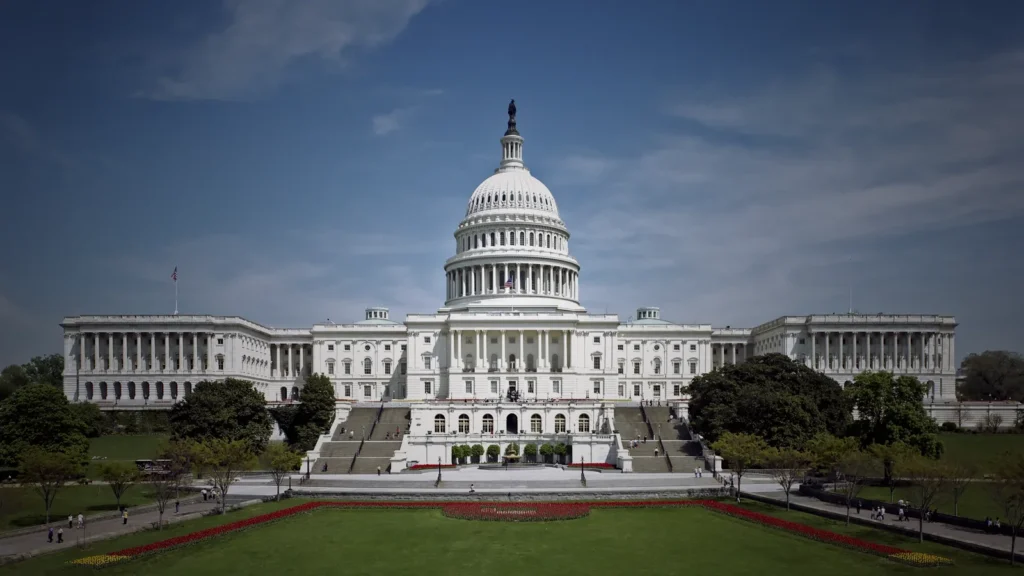
When the internet arrived, offshore operators moved quickly. Sportsbooks and casinos licensed in the Caribbean and elsewhere took bets from Americans with no US license, no state oversight and no local way to complain if a payout never arrived. Federal prosecutors used the Wire Act against some of them; in 2001 an appeals court upheld the conviction of an Antigua bookmaker who took bets from New York.
Congress tried a different tool in 2006. The Unlawful Internet Gambling Enforcement Act, attached to a port security bill, does not make any bet illegal by itself. Instead, it stops gambling businesses from accepting payments for bets that are already illegal under state or federal law. Banks and card networks had to block those payments, and the rules became mandatory in 2010.
Key fact
UIGEA did not make any bet illegal by itself. It stopped gambling businesses from accepting payments for bets that were already illegal under state or federal law.
The biggest blow came on April 15, 2011, which poker players call Black Friday. Federal prosecutors in Manhattan charged the founders of the three largest online poker sites serving US players, seized their domain names and froze bank accounts. The sites stopped real-money play for Americans, and many players waited more than a year for a settlement that let them reclaim their balances.
For players, the lesson of this period still applies. Offshore sites can disappear, freeze funds or change terms, and no US regulator can help you get your money back.
2011 to 2017: States open the door

The turning point came from an unexpected place. In 2011, New York and Illinois asked the Justice Department whether selling lottery tickets online would break the Wire Act. The Office of Legal Counsel answered that the Wire Act covers sports betting only. If a bet on a slot or a poker hand did not fall under the Wire Act, states could license those games online as long as everything stayed inside their borders.
Key fact
In 2011 the Justice Department said the Wire Act only covers sports betting. States read it as a green light for in-state online casino and poker.
Three states moved within two years. Delaware put online casino games under its state Lottery, Nevada changed its online poker law so it could share player pools with other states, and New Jersey legalized online casino games run through its Atlantic City casinos. Nevada’s first legal poker site went live in April 2013, and New Jersey and Delaware followed with full online casinos late that year.
Pennsylvania joined in 2017 with Act 42, a large law that covered online slots, table games and poker, and also legalized sports betting on the condition that the federal ban fell. That condition was met less than a year later.
2018 to 2021: Sports betting goes legal
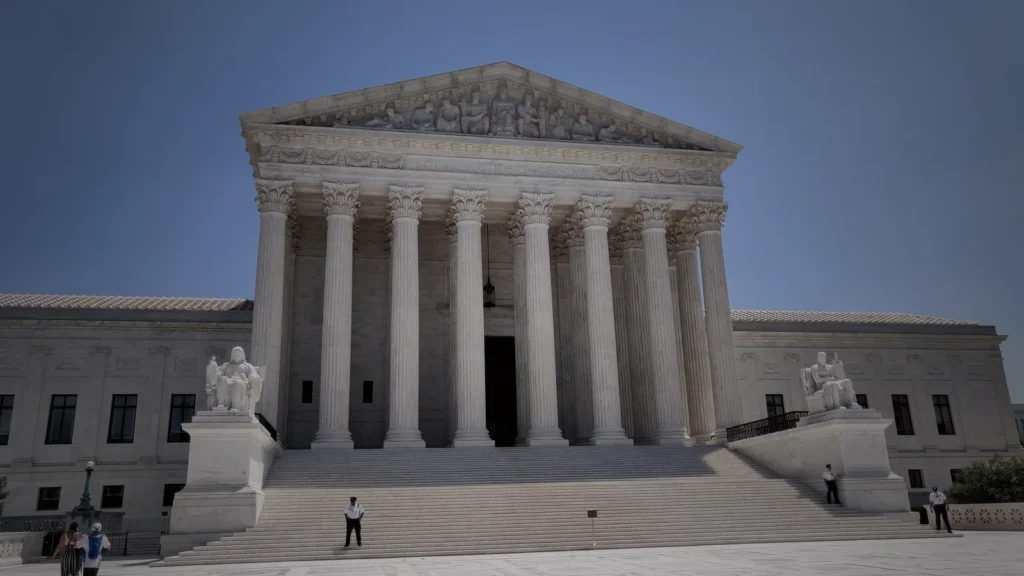
On May 14, 2018, the Supreme Court decided Murphy v. NCAA. The case came from New Jersey, which had fought for years to allow sports betting at its casinos and racetracks. The Court held that PASPA violated the Constitution because Congress cannot order states to keep a ban on their books. You can read the case record on the Supreme Court’s docket page.
Key fact
On May 14, 2018 the Supreme Court struck down PASPA in Murphy v. NCAA. Since then, every state decides for itself whether to legalize sports betting.
The effect was immediate. Delaware launched full sports betting three weeks later, New Jersey passed its law in June 2018, and other states followed year after year. Most states chose to license mobile apps rather than only retail counters, which is why most legal betting now happens on phones.
There was one scare along the way. In late 2018 the Justice Department issued a new opinion saying most of the Wire Act covers all gambling, not just sports. That would have threatened state online casinos and lottery sales. New Hampshire’s lottery sued, and in January 2021 the First Circuit Court of Appeals ruled that the Wire Act applies to sports betting only. State online casinos and lotteries kept operating.
Online casinos spread more slowly than sportsbooks. Pennsylvania opened in July 2019, West Virginia in July 2020, Michigan in January 2021 and Connecticut in October 2021. In each case, the state limited licenses to existing casinos, tribes or the state lottery, and players had to be 21 and physically in the state.
2022 to 2025: Expansion and prediction markets
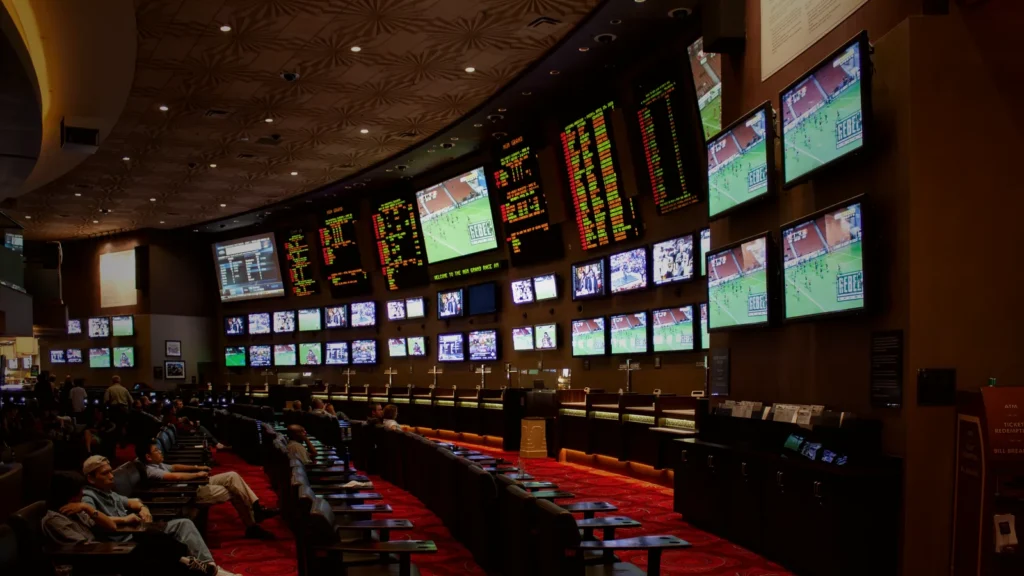
Sports betting reached the biggest markets in this period. New York’s mobile launch in January 2022 drew close to $2 billion in bets in its first month, according to the Governor’s office. Ohio launched on January 1, 2023, Massachusetts in March 2023 and North Carolina in March 2024.
Online casinos did not keep pace. Rhode Island became the seventh online casino state on March 1, 2024, with the state Lottery as operator and Bally’s as its only vendor. No other state opened an online casino between 2022 and 2025.
A new type of product appeared next to licensed sportsbooks. Prediction markets, such as Kalshi, offer event contracts on federally regulated exchanges supervised by the Commodity Futures Trading Commission, not by state gaming regulators. In September 2024, a federal judge ruled that the CFTC could not block Kalshi’s election contracts, and in May 2025 the CFTC dropped its appeal. Operators then expanded into sports contracts, which look much like sports bets to many players and to many state regulators.
For players, the difference matters. A state-licensed sportsbook follows that state’s rules on age, self-exclusion and complaints. A prediction market follows federal commodities rules instead, and whether states can regulate it is still being decided in court.
2025 to 2026: Sweepstakes bans and the prediction market fight
Sweepstakes casinos had grown fast by using a two-coin model: one currency for fun play and another that can be redeemed for prizes. States that never legalized online casinos began to treat the model as unlicensed gambling. Montana passed a ban in May 2025, followed by New Jersey and Connecticut, then California with AB 831 and New York in December 2025. Indiana, Maine, Tennessee, Louisiana and Oklahoma acted in 2026. Our news report on the Oklahoma sweepstakes casino ban explains what changes there from November 1, 2026.
Legal sports betting kept growing. Missouri launched retail and online sportsbooks on December 1, 2025. Two other states passed laws that are not live yet: Maine’s law giving the Wabanaki Nations exclusive online casino rights took effect in January 2026 but faces a lawsuit, and Wisconsin’s April 2026 law on tribal online sports betting still needs compact changes and federal approval.
The prediction market fight moved to the courts and to Washington. Federal appeals courts have split: the Third Circuit sided with Kalshi in a New Jersey case, while the Ninth and Sixth Circuits ruled against it in cases from Nevada, Ohio and Tennessee. On October 19, 2026, the CFTC published an interim final rule stating that state-licensed sportsbook bets and casino games are not swaps, alongside a proposal to define event contracts as swaps. Our coverage of the CFTC swap rules covers what the agency changed and why state regulators object.
States kept pushing back. Utah, where the state constitution bars gambling, sued Kalshi in state court on October 20, 2026; read our report on Utah’s lawsuit against Kalshi. New Jersey has asked the Supreme Court to hear its case. In the same month, New Jersey also made data-driven responsible gaming rules mandatory for online operators, which we cover in New Jersey’s new responsible gaming rules.
Where US gambling stands today
Online casinos: Seven states have legal, live real-money online casinos: New Jersey, Pennsylvania, Michigan, West Virginia, Connecticut, Delaware and Rhode Island. Maine has passed a law but has no live sites. In every one of these states you must be 21 and physically inside the state to play. Our guide to real money online casinos covers the licensed options.
Online sports betting: 31 states and the District of Columbia have statewide online or mobile sports betting, according to our October 15, 2026 check. A few other states allow sports betting only in person, for example at casinos or on tribal land.
Key fact
As of October 15, 2026, real money online casinos are live in 7 states, and online sports betting in 31 states plus the District of Columbia.
Sweepstakes casinos: Ten states have passed laws against online sweepstakes casinos: California, Connecticut, Indiana, Louisiana, Maine, Montana, New Jersey, New York, Tennessee and Oklahoma, where the ban applies from November 1, 2026. Several other states block the model under existing law or through regulator action. Our page on sweepstakes casinos explains how they work and where brands are restricted.
Prediction markets: Event contracts on CFTC-regulated exchanges are available in many states, but their legal status is disputed. Several states have sent cease-and-desist orders or filed lawsuits, federal appeals courts disagree, and the Supreme Court has not taken a case as of October 2026.
What to watch next
These items are scheduled or pending. None of them is decided yet.
- November 1, 2026: Oklahoma’s SB 1589 is reported to take effect,, and at least two sweepstakes brands have published dates for leaving the state.
- November 3, 2026: Nebraska voters decide on Initiatives 440 and 441, which would allow online sports betting through the state’s racetrack casinos. See our report on Nebraska’s online sports betting ballot measures.
- November 18, 2026: The comment period closes on the CFTC’s interim final rule and on its proposal to define event contracts as swaps.
- Pending: New Jersey’s petition asking the Supreme Court to hear its Kalshi case, and Kalshi’s appeal of Utah’s federal court win in the Tenth Circuit.
- Pending: Maine’s online casino launch, which has no date, and Wisconsin’s online sports betting, which still needs compact amendments and federal approval.
US gambling regulation FAQ
What is the Wire Act?
When did sports betting become legal in the US?
Which states allow online casinos?
Are sweepstakes casinos legal?
What was PASPA?
Are prediction markets gambling?
Play responsibly: Legal online casino and sports betting in the US is for adults 21 and over in most states, and only where it is licensed. If gambling stops being fun, free and confidential help is available around the clock at 1-800-GAMBLER.
Sources
- Federal statutes: Wire Act (Public Law 87-216, 1961); Indian Gaming Regulatory Act (Public Law 100-497, 1988); Professional and Amateur Sports Protection Act (Public Law 102-559, 1992); SAFE Port Act, Title VIII (Public Law 109-347, 2006)
- US Supreme Court: California v. Cabazon Band of Mission Indians, 480 U.S. 202 (1987); Murphy v. NCAA, No. 16-476 (2018)
- US Court of Appeals: United States v. Cohen (2d Cir. 2001); New Hampshire Lottery Commission v. Rosen (1st Cir. 2021)
- US District Court for the District of Columbia: KalshiEX LLC v. CFTC, No. 23-3257, order of September 6, 2024
- US Department of Justice: Office of Legal Counsel opinions of September 20, 2011 and November 2, 2018; US Attorney SDNY releases of April 15, 2011 and July 31, 2012
- Federal Register: UIGEA final rule (November 18, 2008) and compliance date extension (December 1, 2009); CFTC interim final rule and proposed rule (October 19, 2026)
- Nevada Legislative Counsel Bureau; Atlantic City Free Public Library; New Jersey Casino Control Commission
- State laws and regulators: New Jersey P.L.2013 c.27, P.L.2018 c.33 and P.L.2025 c.128; Pennsylvania Gaming Control Board; Michigan Gaming Control Board; West Virginia Code ch. 29 art. 22E; Connecticut Office of the Governor and Public Act 25-112; Delaware Code Title 29 ch. 48; Rhode Island Auditor General; New York Office of the Governor; North Carolina Lottery Commission; Missouri Gaming Commission; Maine Legislature (LD 1164); California AB 831; New York S5935A; Oklahoma SB 1589; Utah Office of the Attorney General; New Jersey Office of the Attorney General
- Trade press where no official record was found: Las Vegas Sun, Bloomberg, Casino.org, SBC Americas, Covers, WOSU, PBS Wisconsin, K&L Gates, Congressional Research Service